

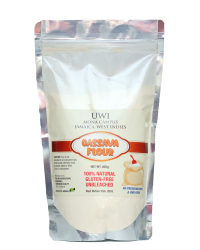

The Novel Composite Flours research project involves innovations around common and recognizable food crops such as dry beans, maize, cassava and vitamin A bio-fortified sweet potato (grown in South Africa, Jamaica and US) which will then be formulated into nutrient dense composite flours for improved (bioavailable) iron and vitamin A, and for protein quality.
By focusing on ingredients derived from local raw materials, an increase in market demand for alternate flours will ultimately also benefit the lives and livelihoods of local farmers in import dependent economies.
designed and formulated to bridge the nutritional gaps in the diet of consumers by combining new and traditional technologies.

Porridge is a popular meal option in Africa – for both children and adults alike,

Jamaica imports 100% of its wheat for use in bread and baked products, contributing to its food import bill of nearly U$1 billion per annum. Partial replacement of wheat in bread and other baked products with local staple crops will support local farmers and reduce food imports.

Certain marginalised, low income, urban populations in the USA are at risk of malnutrition due to poor dietary choices. The high protein bean flour in our composite flours provide improved nutrient bioavailability of these at risk populations.

The blending and formulating of the above ingredients will generate new composite flours that can be used as a part of healthy balanced diets while providing superior nutrition that is suitable for international taste profiles
Composite flours offer several benefits, primarily related to their ability to improve the nutritional quality and versatility of food products.
Here are some of the key benefits:
Composite flours are formulated to include a variety of grains, legumes, and other ingredients, leading to a more balanced and diverse nutrient profile. This can help combat malnutrition and provide a broader range of essential vitamins, minerals, and macronutrients.
By combining different protein sources, such as grains and legumes, composite flours can enhance the overall protein quality.
Mixing grains with legumes can result in a lower glycemic index for the flour, which can help stabilize blood sugar levels and reduce the risk of diabetes.
omposite flours contain ingredients rich in dietary fiber, which can promote digestive health, regulate blood sugar levels, and reduce the risk of certain chronic diseases.
By using locally available and more affordable ingredients, composite flours can provide cost-effective options for both food manufacturers and consumers.
The use of composite flours can enhance food security by reducing dependence on a single crop and increasing resilience to crop failures or supply chain disruptions.

Novel Composite Flour for Globally Nutritious Foods - is supported by Michigan State University through the Alliance for African Partnerships - PIRA grant program and administered by The University of the West Indies, (Mona campus, Jamaica), the University of Pretoria (South Africa) and Michigan State University.
Copyright © 2023 Alliance for African Partnership (AAP)